The Longbody
The Longbody
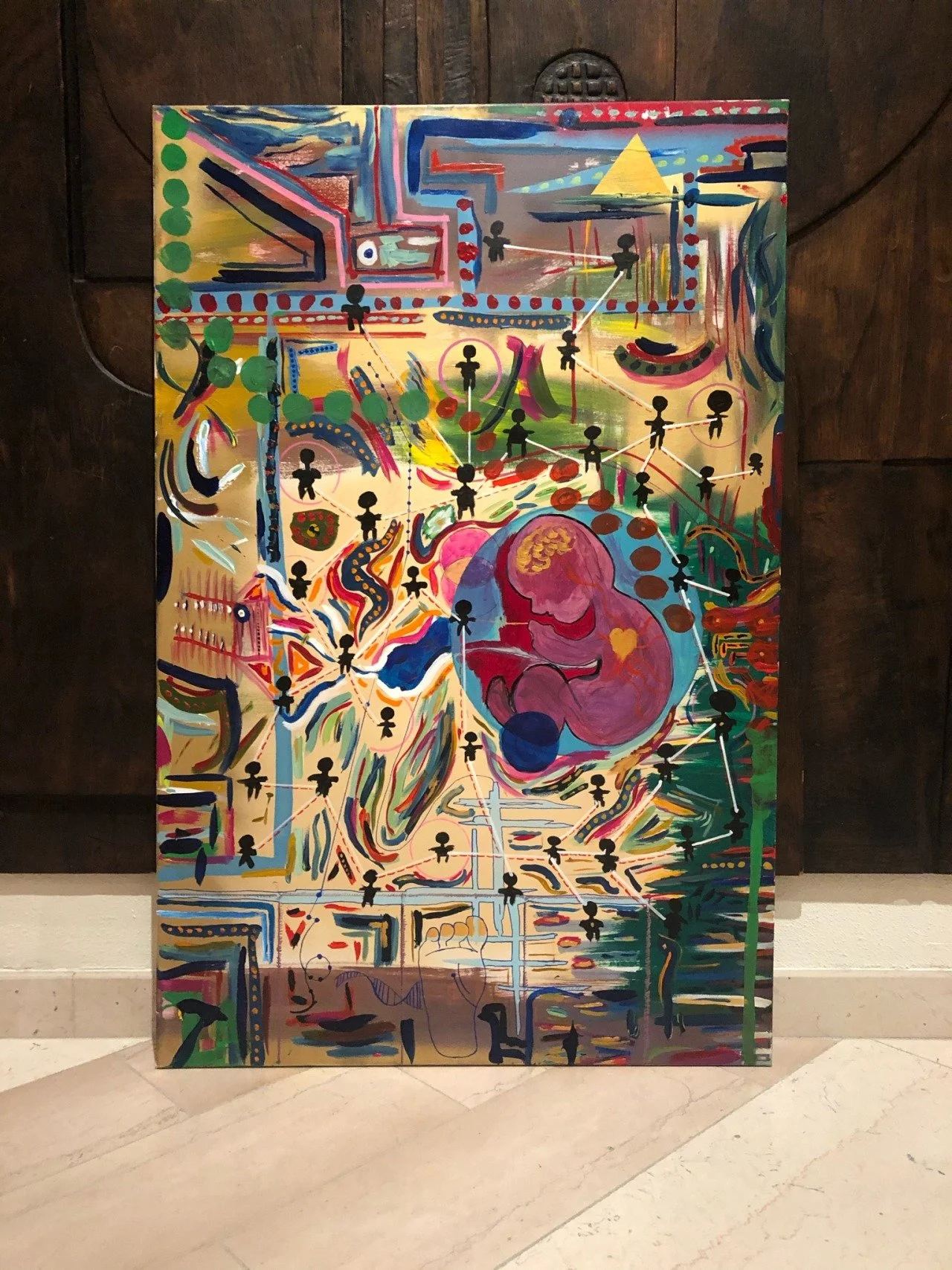
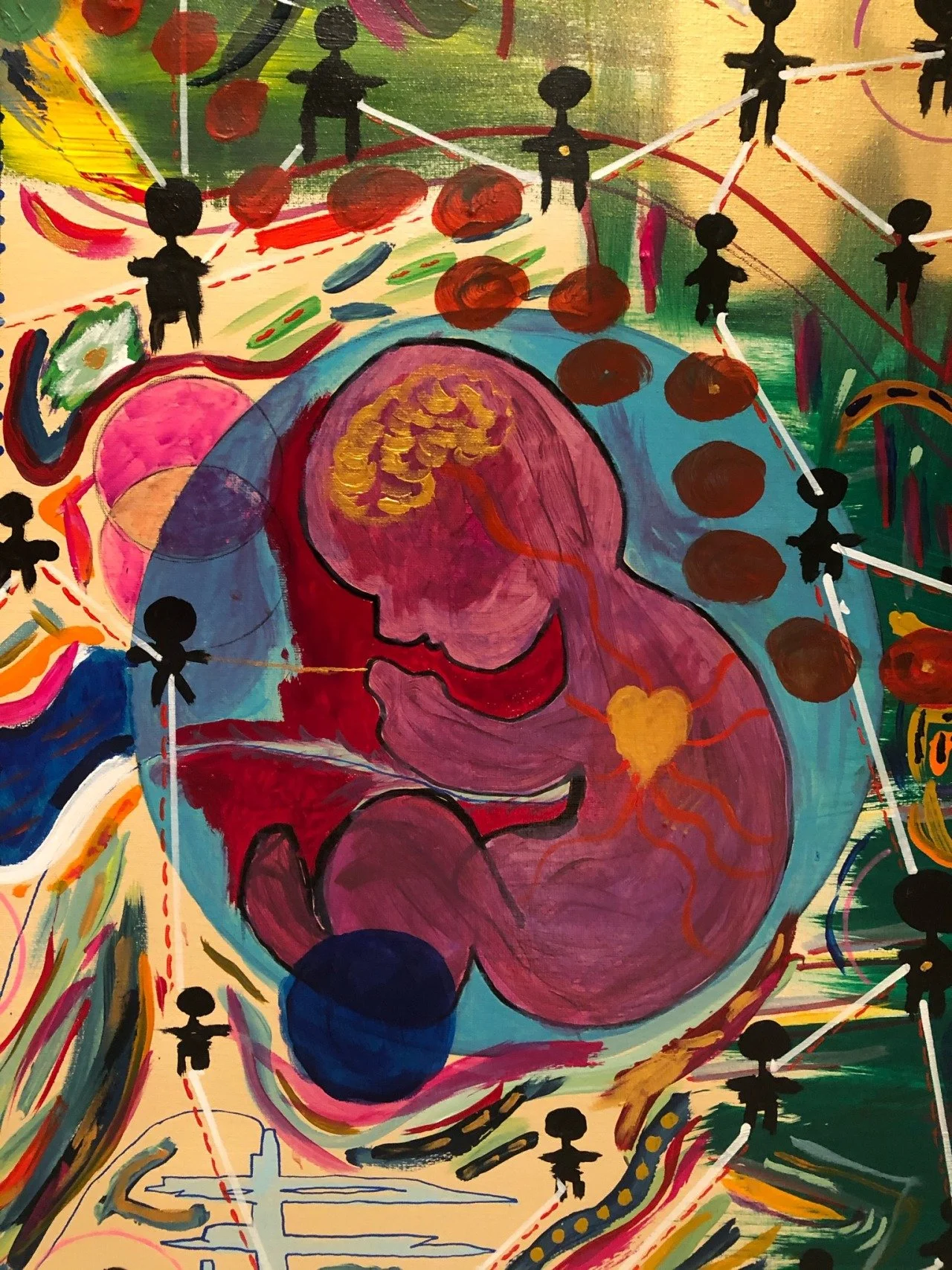
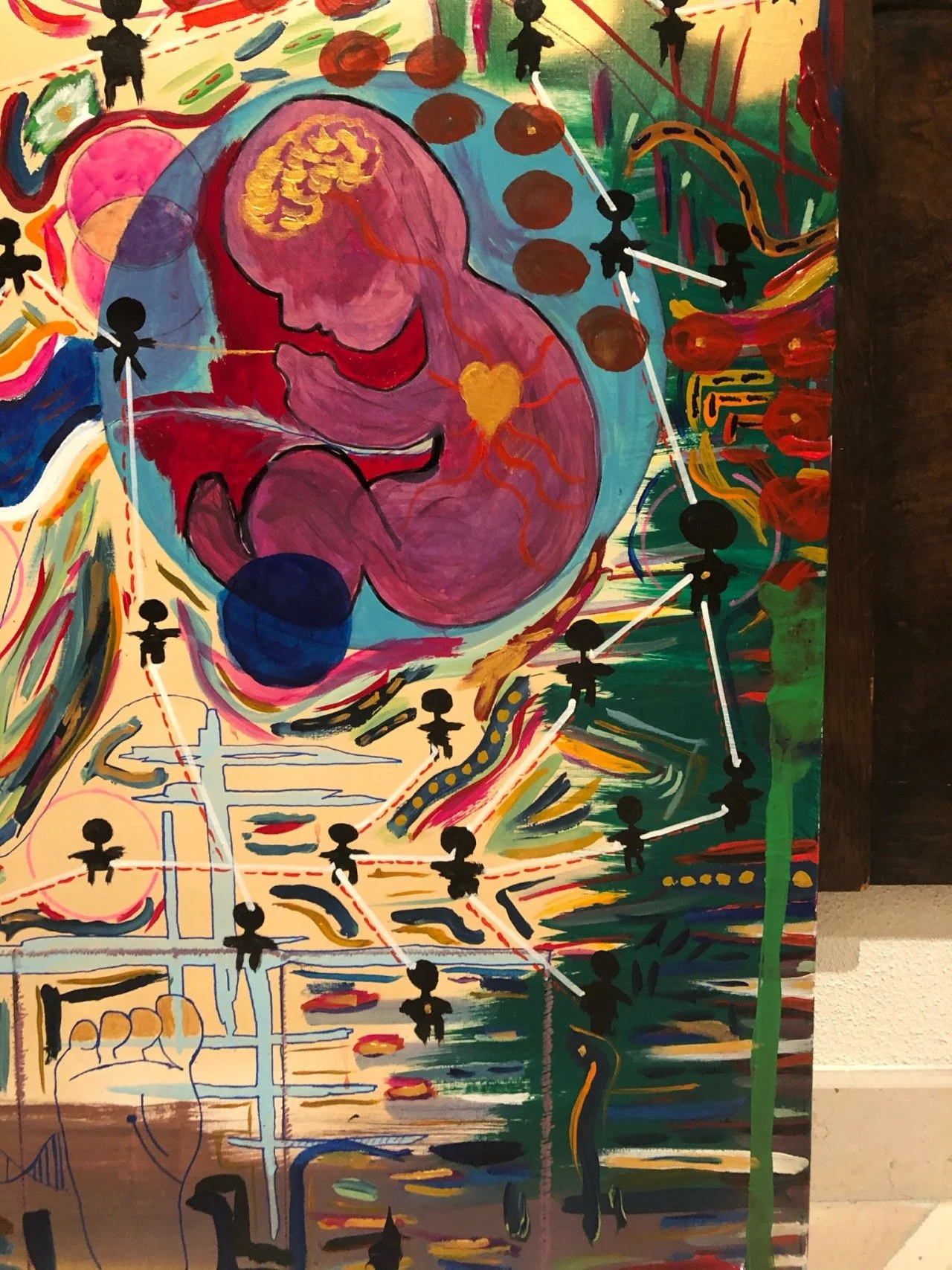
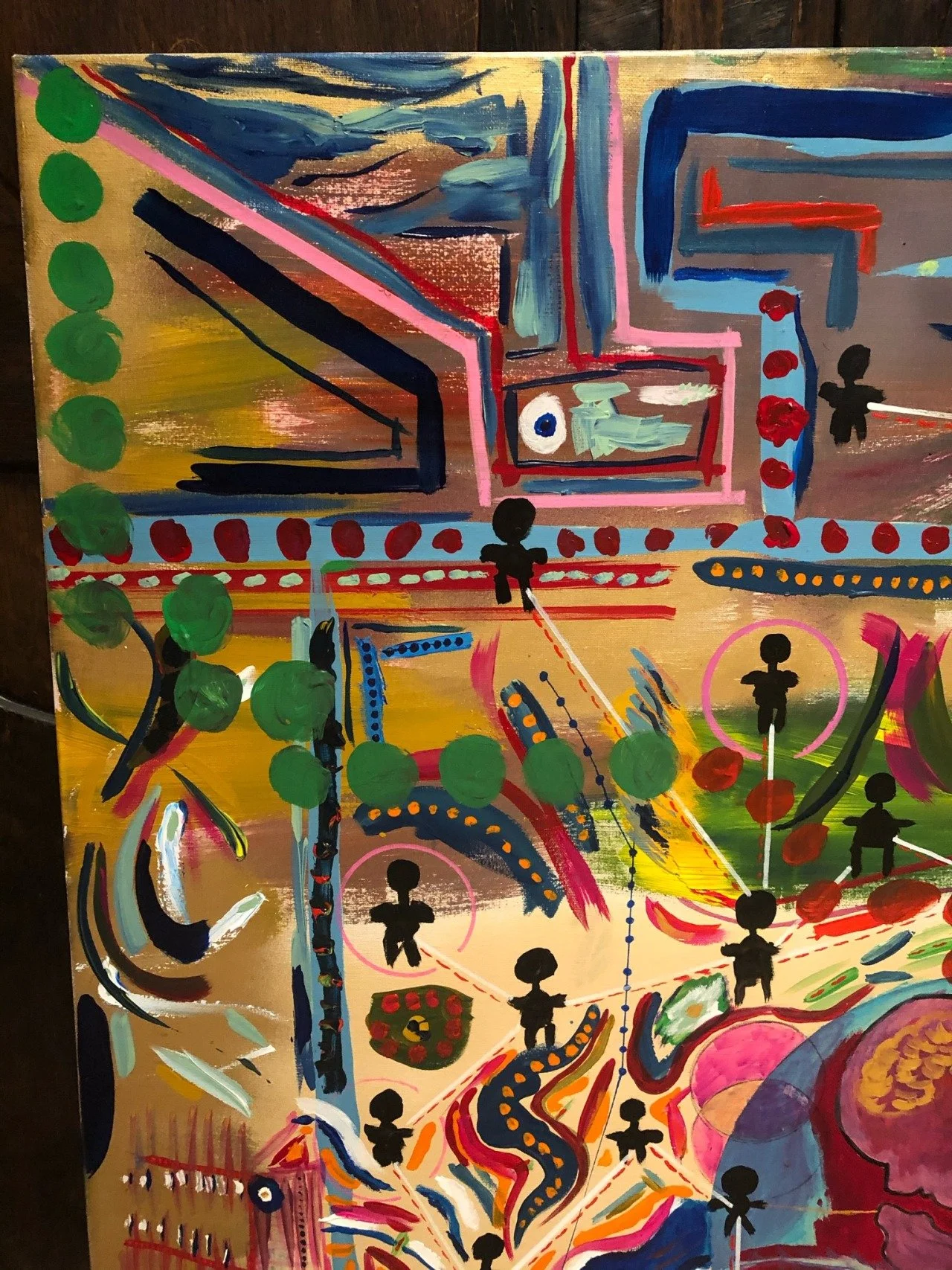
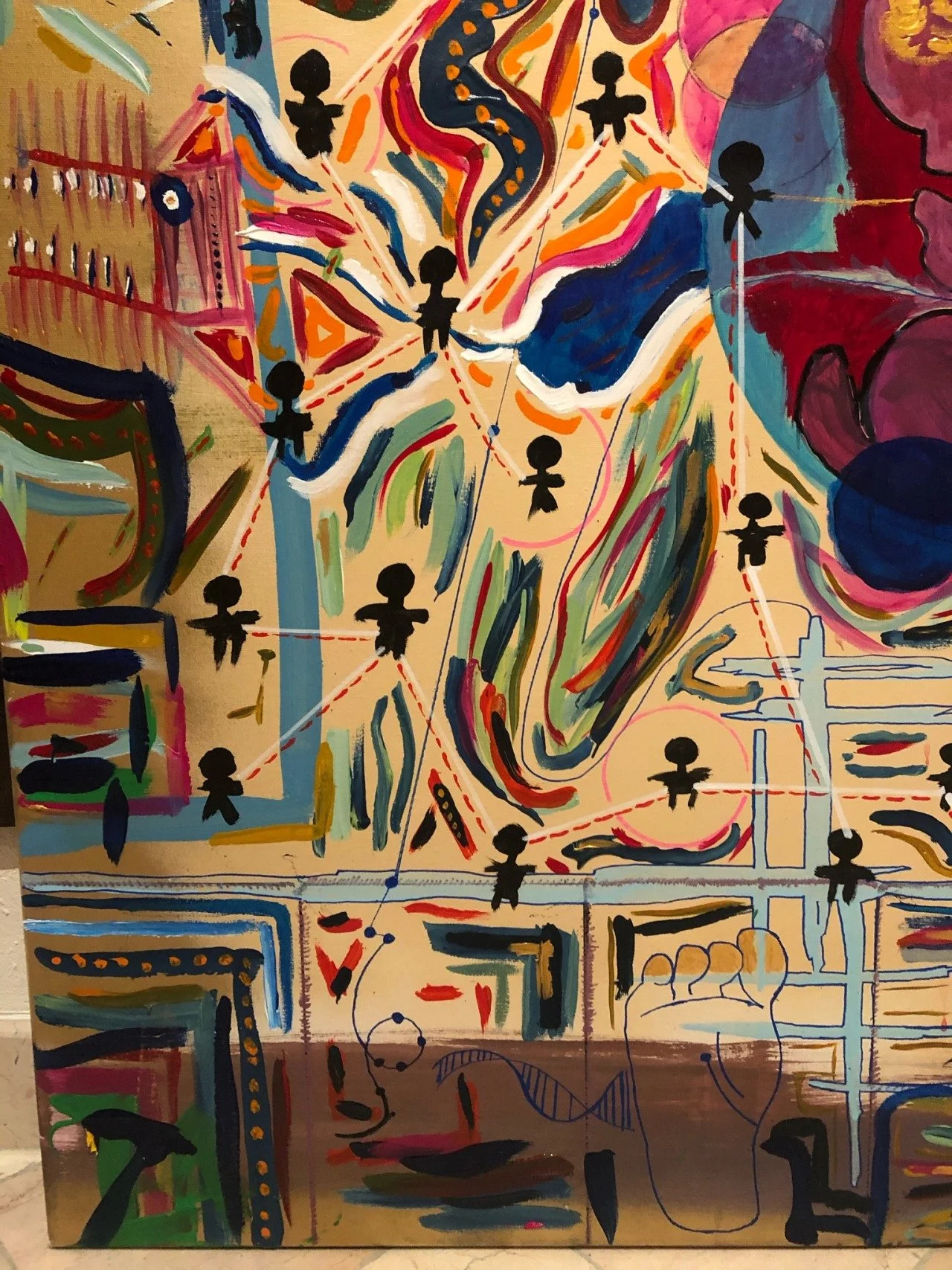
You see the baby in the womb. It represents how we come into this world, and how coming into this world can already be a traumatic experience.
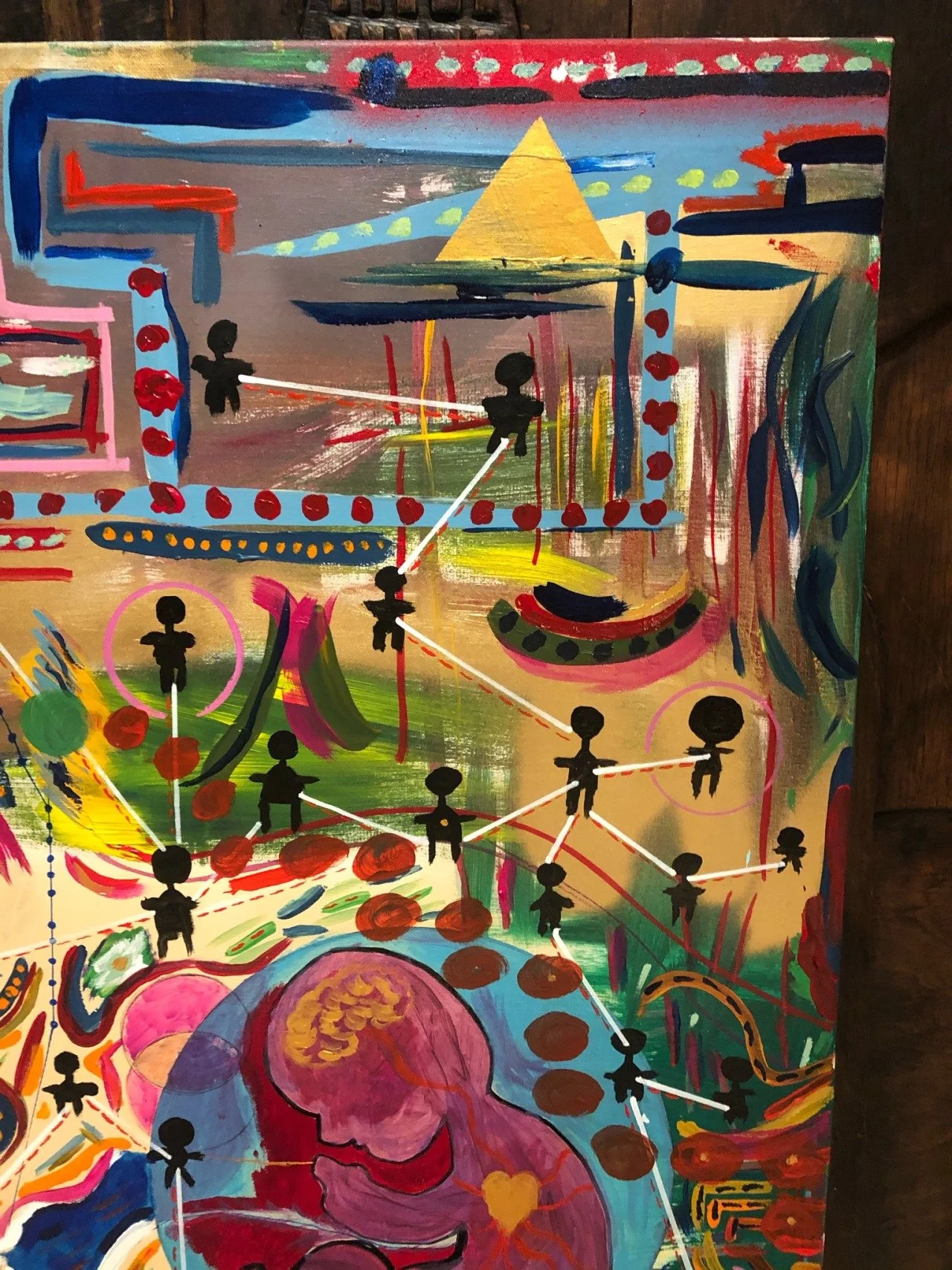
The green and red dots represent the years of our lives. Some years are red with pain, and if we heal, they can become green. These years take on their colors because of the decisions we make—represented by the stripes—and the people we meet, represented by the little black figures.
Together, this represents a system called the Longbody, a Native American term describing how massively connected we are with the biological and social world around us. It refers to the individual body together with the life-support systems surrounding it. It is a much bigger conception of the human body than the one we traditionally have in Western culture, considering the body as continuous with the larger environment.
Social behavior comes through the body—not just the brain.
We rely on our mirror neurons, which respond to other people's movements and attention and allow us to perform a kind of simulation of what they are experiencing in their bodies. This is what is represented by the dragon.
If we are not careful, or if we are simply unlucky, trauma can hit us and sweep through our lives like a dragon. And if we don't fight this dragon, it can slowly begin to cause illness over a longer period of time.
Experiencing trauma in childhood can have a severe and long-lasting effect. When childhood trauma is not resolved, a sense of fear and helplessness can carry over into adulthood, setting the stage for further trauma.
However, even if your trauma happened many years ago, there are steps you can take to overcome the pain, learn to trust and connect with others again, and regain your sense of emotional balance.
The bigger questions this painting asks are:
WHY DO WE HAVE NERVOUS SYSTEMS?
ARE WE CURRENTLY LIVING IN AN ALIEN ENVIRONMENT?
WHERE DOES THE HUMAN BODY BEGIN AND END?
WHAT IS TRAUMA, AND HOW CAN WE LET IT GO?
Check Your Work
Connect your LUKSO Universal Profile to verify this Roland Carter work in your collection.
Congratulations.
You own this work.
Thank you for collecting.
We see and appreciate your support of the Roland Carter collection on LUKSO.
View the work ↗